Showing posts with label Nissan Leaf. Show all posts

Saturday, January 1, 2011

Turning Over A New Leaf in 2011: Nissan LEAF Innovations

With dozens of patents to my name, I consider myself an innovative person. I enjoy looking to the future and wondering how it will be different. So while watching the Lance Armstrong commercial for the 2011 Nissan LEAF, when I heard the tagline "Innovation for the Planet. Innovation for all." it commanded my attention. Searching for LEAF innovations I found a quote from Jon Brancheau, Nissan N. America Marketing VP. He said the LEAF is the "poster child of innovation". Beyond a slogan and marketing guy's word, what innovations does the LEAF really have?

The obvious first thing that someone might call innovative about the LEAF is that it is all-electric. However, I would argue that point. My simplistic definition of innovation is the "introduction of something new". All-electric cars are not new. Production EVs were on the road in the early 1900s, in the 1990s, and there are EV conversions, forklifts, golf carts, the Tesla Roadster... The new thing about the LEAF is not the electric motor.

Innovation: Little Things
There are many small LEAF innovations such as noise reduced wiper blades and wiper motors, the shape of the headlights to move air around the mirrors to further reduce wind noise and the navigation system that shows the vehicle's driving range based on the current battery charge. These are things that make the vehicle more usable. They are not enough in themselves to label the vehicle as a poster child for innovation, but they are nice icing on the cake.

Innovation: Price and Availability
Nissan claims the LEAF will be the first freeway-speed electric car with 10,000 vehicles on the road. Worldwide Nissan is building five factories for the LEAF and its batteries. They're investing around $6 billion into this vehicle's production.

In Oregon, the after-incentive price is $23,780. In Cali, the after-incentive price is $20,280. That is a price that new car buyers can afford.

Before the LEAF, the options for freeway-speed EVs with more than 70 miles of range were limited to the few RAV4 EVs, expensive DIY or professional conversions, or an expensive sports car. The big innovation in the LEAF is the affordability and availability of an all-electric but otherwise very "normal" car. The LEAF is the first affordable, mass produced, EV with the size, speed, and range performance to meet a large percentage of people's driving needs.

The price of the LEAF is a game changer for the would-be EV industry. It will force the makers of vehicles like the Mitsubishi iMiEV, Wheego Whip, Smart ED, and others to reconsider their pricing. There is no significant market for a 100% electric vehicle that performs worse than the LEAF without that vehicle being priced notably cheaper. A smaller EV with less range cannot have a price tag equal or higher than the LEAF and expect to sell many vehicles. Even the Chevy Volt team needs to consider the LEAF when they price the 2012 model year Volt. How much of a price premium is an on-board generator worth? Far less than $9,000, IMHO.

Innovation: Batteries(1)
For innovations, the batteries of the LEAF are a must mention. One of Nissan's advantages is that they make their own batteries. Nearly every other auto manufacturer that is coming out with a PEV in 2011 or 2012 is getting their batteries from someone else. This means that those manufacturers have to share their profits and/or charge a higher price for their vehicles. Nissan has been developing Lithium batteries since 1992 and they are the only company that used Lithium batteries in their 1990's EV (the Hypermini). Just as the biggest LEAF innovation was the business model for affordability and availability, again, in the batteries I assert that there is innovation in the business model. Nearly two decades of lithium powered vehicle experience and their own lithium battery production is unique in the industry.

Let's look at the battery tech itself. Nissan is not babying their lithium manganate packs in the LEAF. Whereas other EVs give the batteries better environmental conditioning than the passengers, Nissan says their batteries can take whatever Mother Nature dishes out anywhere but the worst corners of the globe. The batteries are not liquid cooled or heat pump conditioned. Others in the EV industry have said the lack of an active thermal management system makes it "under engineered" and that relying on a simple passive cooling system is "primitive". It may be but this passive system further reduces the vehicle's price. Will the gamble pay off? The batteries are covered by an eight-year/100,000-mile warranty, so we'll find out. And if this turns out to be "under engineered", Nissan will pick up the tab, not the customer.

Innovation: Connected Car
Next on the innovation list is the "connected car" or CARWINGS features of the LEAF. With this, your car becomes a smart phone accessory. The LEAF's smart phone app connects you to your car so you can check the charge, or turn on the heater or air conditioning. When the car is plugged-in, this feature allows you to use grid power to precondition the cabin. This way you can jump into a nice temp car, ready to drive and while you are driving, little or no energy is taken from your range to condition the cab.

Another connected car feature allows you to set the time that the car starts to charge at night. This allows you to plug it in as soon as you get home, while still paying off-peak rates (if you are on a tiered rate).

This communication path can go both ways. You can have the LEAF email or text you if it is not plugged in by a certain time such as 10PM. This is a little reassurance that you won't walk out to the garage in the morning to find an uncharged car.

And if you want to compare your driving efficiency with other LEAF owners, you can upload your data and see if you rank in the platinum, gold, silver, or bronze category. A little hypermiling social competition can help encourage efficient driving.

Innovation: LED Lighting
Nissan LEAF LED Headlight Assembly
In a traditional gasoline vehicle, the alternator is a small drag on horsepower that is always there. In return it provides power to recharge the starter battery and to run the accessories. In an all-electric vehicle the accessories such as the headlights are powered by the same batteries that are used to propel the car. So it is important that the accessories be efficient.

The LEAF's headlights use two LEDs per headlamp in normal (low beam) operation. This uses only 50 watts of power. This is significantly better than Halogen bulbs that use about 130W. And still better than the 90W LED bulbs that are used in other new vehicles today.

Do these low power lights mean that you won't be able to see the road? At 500 lumens and 5500K color, these wide beam lights ranks very similar to other production HID lamps.

Innovation: Recycled Materials
Last on my innovation list is the extent to which the car is both designed for recycling and made with recycled parts. The seat fabric is made from recycled water bottles and other interior plastics come from recycled material too. The majority of early LEAF adopters will be eco-minded, so this is good marketing, but it is more than just that. It is a smart way to get material for more cars.

Nissan claims that when a LEAF has reached the end of its life, it has a recoverability rate of 99%(2). That is that to say that only 1% of the car will go to a landfill. The other 99% will be reused or recycled. Sure the metals and plastics can be recycled but what about the batteries? There are 600 pounds of them. What happens to them?

To address the batteries, Nissan has formed a new company called 4R Energy Corp. 4R will accept defective and worn-down batteries. Batteries that are no longer sufficient to power a car can still have a long "stationary" life such as storing renewable energy for the grid. 4R will examine each battery that arrives and, depending on its condition, it will be resold, repaired, or recycled. (That is 3 Rs, what is the 4th R?) The LEAF batteries are a combination of lithium, manganese and graphite, which means there are no toxic materials in the batteries making them easier to recycle than some other battery chemistries.

To anyone that is concerned that EVs trade foreign oil dependency for a lithium dependency, I must point out one significant difference. The lithium in a battery is not consumed. When the battery is no longer useful, the lithium can be made into new batteries. This means that not only will the next generation of lithium batteries be lighter and hold more energy, but they will also be cheaper because there will be a steady supply of 'used' lithium. Let's compare this to something a little more familiar. When was the last time that you had a can of soda? If it was recently, than that aluminum can likely included metal that had been an aluminum can hundreds of times before, and possibly some aluminum that was last year's iPod case and yet more that was an old airplane structure. My point is that metals like aluminum (and lithium) can be reused indefinitely.

Again Nissan's innovation is not the technology (they didn't invent recycling), but it is the business model that takes advantage of it in a way that allows them to deliver an affordable product profitably. In 4R, they have established a source for recycled lithium to be used to manufacture their next generation battery packs. This will help them maintain a profit and price advantage compared to other EV manufactures that are buying batteries from 3rd parties or mining for virgin material. 

Conclusion
Nissan is uniquely positioned to be able to deliver an all-electric car in volume, at an affordable price, while still making money on the transaction.This is primarily due to planning they have been working on for decades. They knew the time for EVs was coming and they were not going to miss the critical technology inflection point where market leaders and laggards are determine.

As an engineer, I assume everyone from marketing is a Dilbert caricature and I hate to agree with them. However, this time I will say that I do agree with Nissan's Jon Brancheau that the LEAF is a "poster child of innovation". Nissan has ambitious production goals, new ways to get materials, make cars, and price EVs and the LEAF has many new features that make it easier to use than previous generations of EVs. Nissan is "all in" with their bet on EVs. They have the technology and the innovative business plan, to make that a winning bet.


References:
1) Nissan Batteries
2) LEAF Recoverability Rate

Thursday, December 16, 2010

Nissan LEAF Was My Idea

Have you ever seen the commercials for Windows 7 where a user has an idea for an OS feature? In the ad, Windows 7 came out and it included that feature. The user then proclaims "Windows 7 was my idea." That is how I feel about the Nissan LEAF.

The first Nissan LEAF cars are being delivered to customers this week. This is a historic time for EVs. In October of 2008, I was selected to take part in a small focus group of EV-drivers with Nissan. We met with several people from Nissan including Mark Perry, director of product planning and strategy for electric vehicles. This was the first time that I had ever met anyone from Nissan. I had no idea if Nissan was serious about EVs, or if they would really listen to what I had to say. I had been reading a lot of press about EVs at that time and I had not seen a product that focused on what I thought were the right things. A chance to talk to a car company, any car company, was an opportunity to share my thoughts.

During the session, I was one of the last participants to address the Nissan team. Most of the other members talked to them about how great 100 miles would be and about deploying charging infrastructure. As I have discussed recently, I don't think charging infrastructure is the priority. Rather, I focused on what I thought the *car* should be. Obviously I am biased, but it seemed to me that the Nissan team was far more engaged when talking with me than with the other participants. They had several direct questions as well as open ended discussion areas. Here are some of the many things we talked about.

Set Realistic Expectations
Their opening statement was "We will be selling an affordable, mass market, 100-mile range, fully electric, freeway capable car. It comes to market in late 2010. What do you think the car needs in order to be successful and what do we as a company need to do to make it work in your region?"  I was skeptical. Remember this was 2008. It is easy to make big claims like this and no one had ever delivered on them. Every EV that had been brought to market up till that point had been a niche vehicle. Even the highly priced Tesla Roadster had slipped its delivery date multiple times in 2007 and in 2008 only a handful of Roadsters had been delivered. It was the only freeway capable EV being sold at that time, and with the $100k price tag it was a niche vehicle. With Tesla having CEO troubles, it was not clear if the little up-start would survive and ever make it to their "Blue Star" project. In 2008, wildly hyped vaporware was the norm in the EV world. I suggested that they take the opposite approach and "under commit and over deliver" rather than fall into the hype-cycle syndrome. If the vehicle was really only going to get 70 miles of range in real-world driving, start saying so now.

The rule of thumb is that an EV must exceed the 70/70 point to have any hope of broad appeal. That is minimum of 70 miles range in real world conditions and minimum of 70 MPH top speed. If the goal truly is a mass market vehicle, they must surpass these minimums, or go back to the drawing board.

Range Anxiety
Our next topic was range: One hundred miles of range was the stated goal. Many of the participants in the room talked about how great that was and how it is more than enough for most people, even if they don't know it. And while I agree with that, the important thing is to make sure the vehicle alleviates range concerns whenever possible. Make the vehicle to sell to the customers as they are; not how you want them to be. People currently are concerned with range. When I am showing my EV, the most common question is how "far will it go?". Right or wrong, some people will be concerned about range until EVs can drive the 300+ miles per charge, comparable to a typical full tank of gasoline.

To address range concerns, Nissan must give drivers the range data in a clear picture. My recommendations were:

  1. Show how far the current charge level will take the vehicle. Not with just a number, but I wanted to see on the map if the place I want to go is within my currently available range. I wanted to be able to check this even if I had not entered my destination, because most of the time I know where I am going and do not need to enter an address.
  2. Include charging station locations in the navigation system maps. This seems obvious now, you can find Google mash-up maps of just about anything, but back then (over 2 years ago) it seemed like a great idea.
  3. If I enter a destination beyond the range, suggest charging points along the way.
  4. Have a "Find Nearest Charging Station" button that is prominent. The button should be on the steering-wheel or a fixed button near the navigation system. I don't want to have to go through levels of menus to get to this. This is the "Oh no, low battery!" button.
Charging station locations will be added frequently over the first few years that the cars will be on the road. It is a pain to keep car navigation system maps up to date. You have to download files, burn a disc or use a thumb drive, take it to the car... Forget all that, it is a hassle and I would not want to do it on a frequent basis. Rather, I said they should include a telematics system that automatically updates the maps in near real-time.

Size
When they asked what size I thought the vehicle needed to be, I told them the story of buying our first hybrid. Early in 2000 our Subaru Outback had been totaled. We wanted a fuel efficient car to replace it. After some research we had found that Honda and Toyota were coming out with hybrids within the next year. These were the top two candidates. A few months later, a nearby Honda dealership had an Insight that we could test drive. It was not a good fit for us. The 2-door felt crowded and impractical. Based on that test drive, we went to Toyota and put down a deposit on the 4-door Prius, sight unseen, no test drive (there were no cars in our area to drive yet).

We were on a waiting list to get one of the first Prius sold in the US. It was 9 months before the car arrived. During which time my wife took the bus to and from work. She was determined to get a car that used less fuel and was already loyal to a car that she had never driven.

What does this anecdotal story mean to Nissan for their (then yet-to-be-named) electric vehicle? If they truly want it to be mass market, make it a 4-door. I also mentioned that the car should be sized for Americans; we are big people and generally need a little more room than people from other parts of the world.

Naming
Multiple participants asked in various ways what they were going to call the vehicle. They did not give us any hints. When the name topic came to me, my only suggestion was that they have a dedicated EV name. E.g., they should not launch with an "Electric Altima" or an "Electric Cube". My example was again the Prius. Prius sales were far better than Hybrid Camry or Hybrid Civic. If they wanted electric versions of their existing line, they could do this later. They must have an EV flagship product first.

For early adopters especially, part of the experience of buying a new breed of cars is being part of something special. This does not mean the vehicle has to stand out as weird, but it does have to be recognizably badged as an EV. It has to be its own brand and not "just a sub-brand". Owners will want a name they can rally around, with their own fan sites and discussion groups. They don't want to be some sub-group on a gasoline car forum. 

Ford's hybrid badge uses a leaf
Later after the name LEAF was announced I found out why they did not give us any hint at what the name might be. They wanted a single worldwide name for the vehicle and Nissan's various countries could not agree, primarily Japan and the USA offices could not agree. Japan would suggest something like "the Nissan Plug" and the USA office would point out how that name has no excitement and would be subject to ridicule. Other names ran into copyright issues in one or more countries.

Toyota's Prius marketing used a leaf
The name LEAF even had some trouble. First Nissan could not get the rights to use a leaf symbol. Check out their early marketing. They use a blue tree. Whereas both Ford and Toyota use a leaf symbol (see pictures to the right). The name LEAF is an acronym (or more likely a bacronym) of Leading, Environmentally-friendly, Affordable, Family car. The use of the name as an acronym likely cleared some final region's legal hurdle.

Gas Car Rental Partnership 
About one week before this meeting with Nissan, I was talking to another member of the Oregon EV Association about what he drives and I was surprised to hear that his only car was an EV, whereas in my household the EV was just one of three vehicles. When I asked what he does when he needed to drive farther than his EV would take him, he said he was a member of Zip Car and that there was a car that parked in a dedicated spot at his work and several cars were within EV range of his house. He could take the Zip car whenever he needed it. I found this model of EV ownership and ride sharing interesting.

I suggested that Nissan should consider a partnership with ride-share companies and car rental companies to give Nissan EV owners discounts on occasional gas car use. 

Roadside Assistance
Soon before attending this meeting with Nissan, I received an email from AAA of Oregon stating that they were adding roadside assistance for bicyclists. If you get a flat or bend a fork, you could call AAA and get repair help or a ride back home for you and your bike.

If AAA were willing to add bike assistance, what could they do for EVs? If you were to run out of battery power, could they bring a 240V generator to you and give you enough of a charge to get home or to the nearest charging station? It is unlikely that this service would be needed often, but the point of a roadside assistance program is peace of mind. Also, if this further alleviates range anxiety, it would be a good idea to work with road side assistance companies to support EV drivers.  

Under The Hood
As I have mentioned before, I show my EV a few times each year at various events. People often want to see under the hood. In a conversion EV there are usually interesting things to see, like where parts were mounted and how various wires were run. My EV, however, was factory build as electric by GM. It has a large heat-sink that covers most of the visible area under the hood. Frankly, it is boring. Yet, people are curious and so the hood is up and it leaves them underwhelmed.

I told them that early Nissan EV owners are going to be advocates for these cars. People will approach them and ask questions, and based on my experience they will want to see under the hood. So Nissan should consider adding a little more visual appeal here than they normally would.

LEDs
I have written in this blog several times about LEDs. A couple months before this meeting, I changed the tail lights in my EV to LEDs because they illuminate faster and they are brighter. If a vehicle were designed for LEDs, they could also use less power. I suggested that the Nissan EV use LEDs wherever they could.

Regen Breaking Level
Many people that are into electric cars love regenerative braking, so much so that they want to feel it kicking in as soon as they lift their foot off of the accelerator. I prefer to coast when I can. Coasting maintains momentum and if the obstruction ahead clears or the light turns green, you can keep on going rather than stopping and starting. Even if you have great regenerative breaking, coasting is better than regening and then accelerating again.

My recommendation to Nissan was that this a "religious war" that they don't want to get in to. On one hand they might want the car to feel like most cars on the road today (light regen). On the other hand, they will want to have a heavy regen option to appease the many EV enthusiasts that think that there is no such thing as too much regen.

The best option is to have this be user settable. This would allow people to set the regen to the level that they like.

Solar Panel
My final item to them was to mention that they should consider adding a solar panel, but perhaps not for the reason that you think. Yes, I am a solar advocate, but I am an engineer first. If you want a solar powered EV, currently the best way to do that is with solar panels on your house, not on a car. There simply is not enough roof space on a car to make it practical today.

So if I know the math does not support it, why did I suggest that they have an option for a solar panel? Nearly every time that I am displaying my EV at an eco-event, someone will suggest that it would be great if I could add solar panels. I used to explain the available surface area and angle and efficiency details, often during this explanation their eyes would glaze over. Now I just say "Well, I have solar on my house. It works better there since I never park my house in the shade."

Nissan could avoid a deluge of email in their inbox from well intentioned, uninformed people by adding a solar panel; even if it is just a single small panel that is only offered as an over-priced accessory. It does not need to add any range it just needs a token function such as running a cooling fan. This gesture would make them happy.

Again, this is about selling to the customer that is there, not some ideal person. And explaining to someone that they have a bad idea is generally not the best way to start a customer relationship.

Conclusions
After the meeting, as we are leaving and shaking hands with the Nissan team, saying thanks and goodbye, Mark Perry from Nissan takes me aside. He said something like, "I really liked what you had to say today and I have made some notes to take back to the engineering teams". I am sure that many of the things that define the LEAF today would be exactly the same as they are even if I had not attended this meeting. And I am sure they don't make any decisions based on input from one guy in a customer roundtable session. But once the LEAF did come out, and I saw that it had many of the things that I had suggested, it felt good. It felt like they really listened and that I helped make this generation of EVs a little better.

To this day when I see a review of the LEAF and someone says "I really like this nav system. It shows me exactly how far I can go with this circle and it shows me all the charging stations around here," I think "That was my idea. I'm glad you like it."

Comparing the LEAF to my suggestions
So how did Nissan do with the LEAF compared to what I thought an EV should be? Some of that is covered already, but I'll do a point by point breakdown in another blog post soon.


-----------------
C-Net Review of the LEAF

Thursday, November 25, 2010

You Don't Know EVs


Mass market electric vehicles (EVs) are coming soon to a dealership near you*. The Nissan LEAF and Chevy Volt are both scheduled to begin delivery in early 2011. These vehicles are very different from the gasoline powered cars that most of us are used to driving. EVs are new to the mass market and people are asking questions. These questions, however, often come from their gasoline driving experience. For example, when I am showing my EV to the public the typical questions are:

  • How far can it go on a charge?
  • How long does it take to recharge from empty?
  • How fast is it? (top speed & 0-60MPH)
These seem like important things to know about a car, and they are; however, most people are asking them without really understanding the question. I'll explain. If you are willing to take a step back, and look at personal transportation from a fresh perspective, EVs are a whole new opportunity.

"How far can it go on a charge?"
When people ask this, what they often really want to know is, "Will this go far enough for my needs?". Most people don't know how far they drive on a typical day. The numbers that most people know are: one, how many miles they get on a tank in their current vehicle and, two, how far it is for that long annual trip they take. Neither of these numbers apply to a commuter EV, yet the EV range value will be compared to them. When they hear that an EV can travel 100 miles or 120 miles, this is compared to the 300 plus miles that they get per tank or the 580 miles to grandma's they drive every other year. This makes the 100 mile EV range sound far too small and EVs are dismissed as unusable or "not yet ready". They don't realize that 80% of people drive less than 40 miles per day.

Less than 40 miles per day for most people means that a 100 mile range is more than 2.5 times the distance that most people need on most days. And unlike a gas car, EVs can be conveniently charged overnight in your own garage and start out each day fully topped up.

Viewed another way, how often are you filling up that gas tank? If a tank carries you 350 miles, and you are filling it up once per week, that is an average of 50 miles per day; well within the capabilities of modern EVs.

If you want to quickly map your driving, try the Nissan 100 mile drive test. Plug in your own locations for a busy day. Try home to work, to the gym, errands, dinner, and back home. Or try home, school, shopping, pick up kids, soccer, dance, then back home. Can you do these with miles to spare? For most people the answer is 'Yes'. This means an EV can fit most people's lifestyle well. If your answer was 'No', read on, option #5 below might work for you.

What to do about that annual long trip? There are several options.
  1. Keep a gas 2nd car around. Use your EV whenever you can and the gas car when the EV won't work. See Hybrid Driving without a hybrid car. If you drive the gasser less than 5k miles per year, you may be able to put it on recreational insurance rates.
  2. Borrow a gasser. Swap cars with a friend for a week. They get to try out an EV and you can take your trip.
  3. Rent a car. The annual savings you get from not buying gas will allow you to rent a nice vehicle for an extended period of time and still come out ahead.
  4. Ride Share. Programs such as Zip Car have been expanding. If there is one in your area, this can complement EV ownership well. Just log-on, find a car parked near you, reserve it with a click and it is yours when you need it.
  5. Buy a PHEV: Rather than buying a pure EV, buy a plug-in hybrid like the Chevy Volt, the 2012 Prius PHEV, or the Fisker Karma. You don't get all the benefits of a pure EV, but you can utilize a gas station when needed.
The new perspective on range is how far per day, not how far between fill ups. On to the next question.

How long does it take to recharge from empty?
No one wants to be stuck for hours waiting for their car to charge before they can go someplace. Vehicles represent our freedom. When you drive an EV, you can be less restricted, not more.

Going to the gas station is inconvenient, so we tend to put it off until it cannot be avoided. Therefore a gas car is usually being filled up from empty. Don't assume the same with an EV, in fact, the opposite is usually true. For an EV, the charging station is right there, in your garage, the one that you are already driving to when you go home. It is not a side trip that you have to make to fill up. This means that you can plug in each day, even if you only drove a few miles.

Until you stop going to gas stations, you may not realize what an inconvenience they really are. Compare this to your cell phone. You plug in your phone overnight and it is fully charged, ready for all your needs the next day. That is convenient. By contrast, what if you were not allowed to plug in your phone? Instead, you had to take it to a "phone station" each week for a "fill up". This would be intolerable, yet it is OK for our cars because most people don't know of any other way.

Continuing with the cell phone analogy, do you know how long it takes your cell phone to charge up? Probably not, it depends on how much you have used it that day, and most likely you don't really care because an overnight charge is more than enough. The only time you pay attention is the few seconds it takes to drop the phone into the cradle and then to grab it the next morning.

It is the same with an EV, your attended time is just the few seconds to plug it in each evening and unplug it each morning. The charge duration is completed while you sleep. Most days the battery pack is more than half full at the end of the day, so charging to full has a head start. Public charging infrastructure is nice to have, but it is not required for EVs to be usable.

The new perspective for charge time is not how long does it take, but how much of my time does it take. EVs take far less of your time.

What if I am stranded with a drained battery, how long will that take?
Modern EVs such as the LEAF will show you on the nav system how far you can go. If your destination is not within the circle, you cannot get there without stopping to charge. When you do stop to charge, no one said that you must charge up all the way. If you are plugged into a standard 120V outlet this will give you about 7 miles of addition range per hour. A Level 2 outlet that you'll find at EV charging stations will give about 16 miles of additional range each hour you are plugged in. So a stop for lunch or dinner can give you the extra miles you need to get home or your stop for the night.

Tom Saxton is a Seattle area Tesla Roadster owner. He has blogged about driving his roadster down Highway 101. He stayed at the coast, charged overnight, drove into Portland to meet up with NEDRA, raced his Roadster, charged between races, and then headed back home. He was able to make the entire trip without ever waiting for the car to charge. Charging was always something that he could do in the background while he was sleeping or waiting for his next turn on the line. Granted the Roadster is out of most people's price range, but you can do the same thing in a LEAF on a smaller scale.

The new perspective on charge time is the charging rate in miles per hour, not hours till full.

How fast is it? (top speed & 0-60MPH)
I think most people that ask this question are wondering "Is this a golf cart or a real car?". There have been many low speed EVs and glorified golf carts that have been pitched as the solution to transportation. Skepticism here is well deserved. Low speed EVs have niches that they can serve very well such as retirement communities or commutes that can be done exclusively on residential roadways. However, when they are sold outside of these niches they fail to meet the needs and give all EVs a bad name.

Perhaps in part because of the "golf cart" experience, many people assume there are things that an electric motor is just not suited to do. In fact, other than burn gas directly, electric motors can do everything and more that internal combustion engines are used for today. Such as, the little white car shown in the picture to the right. It is an electric car that can run the quarter mile in 10.4 seconds. That is supercar territory. And it was done as a DIY project with a Datsun and two forklift motors.
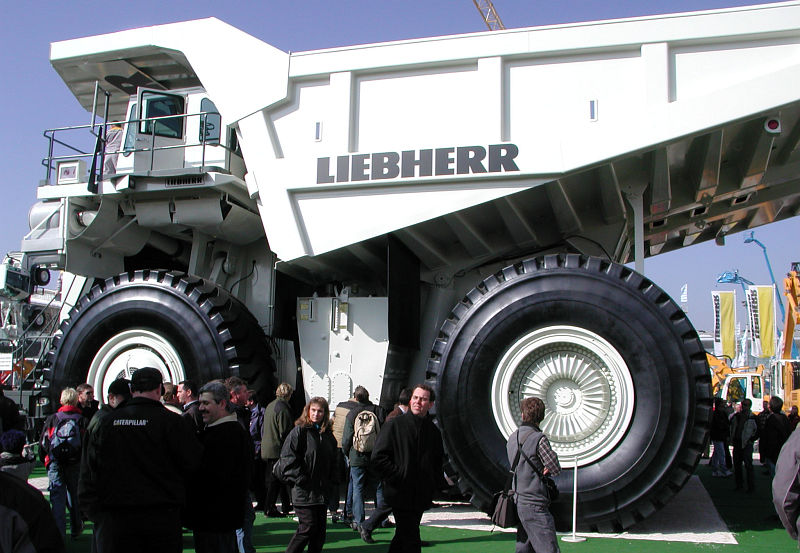
What about big loads? Surely electric motors cannot handle hauling. Think again. Diesel-electric trains have moved big loads for years. The diesel is only used to generate electricity. It is the electric motors that do all the work of moving the load. The same is true for many types of giant hauler trucks like the one shown to the right. Large mining machines, NASA's huge Crawler-Transporters, some submarines and ships also use electric motors.


Assuming all electric motors are weak based on riding in a golf cart is like seeing a moped and assuming that a Dodge Viper is not possible.

Performance, hauling, & range are all possible if you are willing to pay for them. In the '90s, Ford and Chevy both made electric trucks. Ford, NaviStar and others have new generations of EV trucks planned.

The new perspective: EVs can be whatever we design them to be.


Conclusions
To truly understand if an EV would work for you, it should be compared to your needs, rather than to the gasoline car that you drive today. This means that you have to understand your current driving habits. How far do you drive in a day? Try resetting your trip meter each morning this week to see. How many hours does your car sit parked each day? If an EV was plugged in for just those hours, would it get enough range for your current driving needs?

EVs are a new tool for your transportation needs. They do not work in all cases, but they can work for many people and coupled with a 2nd car or a range extender, a large percentage of your driving can move off of gasoline.

Thursday, April 1, 2010

March 2010 EV and PV Report


Spring is here and the solar panels are starting to produce the juice. In March, our little PV system generated 294 kWh. That is enough to run a CFL for nearly 200,000 hours. Since its late 2007 installation, our system has generated a total of 8.1 megawatt-hours. We passed the 8MWh milestone on March 21st, the 2nd day of Spring here in the northern hemisphere.

For my EV driving, I logged 472 miles in the Chevy S10 EV, using an estimated 300kWh. This is nearly equivalent to what the panels produced. This means that, as it continues to get sunnier and the days get longer throughout the summer, we'll be generating more power than the EV driving uses.

The big new in electric vehicle for March is that Nissan announced the price of the LEAF. It is $32,780. However, there is a $7500 federal tax credit bringing the price to 25,280. And additional state incentives are offered in California, Colorado, Georgia, Illinois, Louisiana, Oklahoma, Oregon, South Carolina, & Utah. In my state of Oregon the incentive is $1500, bringing the price to $23,780. In California, the state incentive is $5000 making this 100 mile range EV only $20,280. That is cheaper than a Prius and far cheaper to "fill up".